
Gambiered Canton Silk
Within the Chinese word for “fashion” (时装), the character shi (时) signifies not only style and trend, but also time itself. Japanese textile artist Reiko Sudo once remarked that the true allure of fabric lies in the fact that it remains closest to the human body, accompanying a person from birth to death. The relationship between people and garments is therefore reciprocal — a quiet narrative woven between the individual and time.
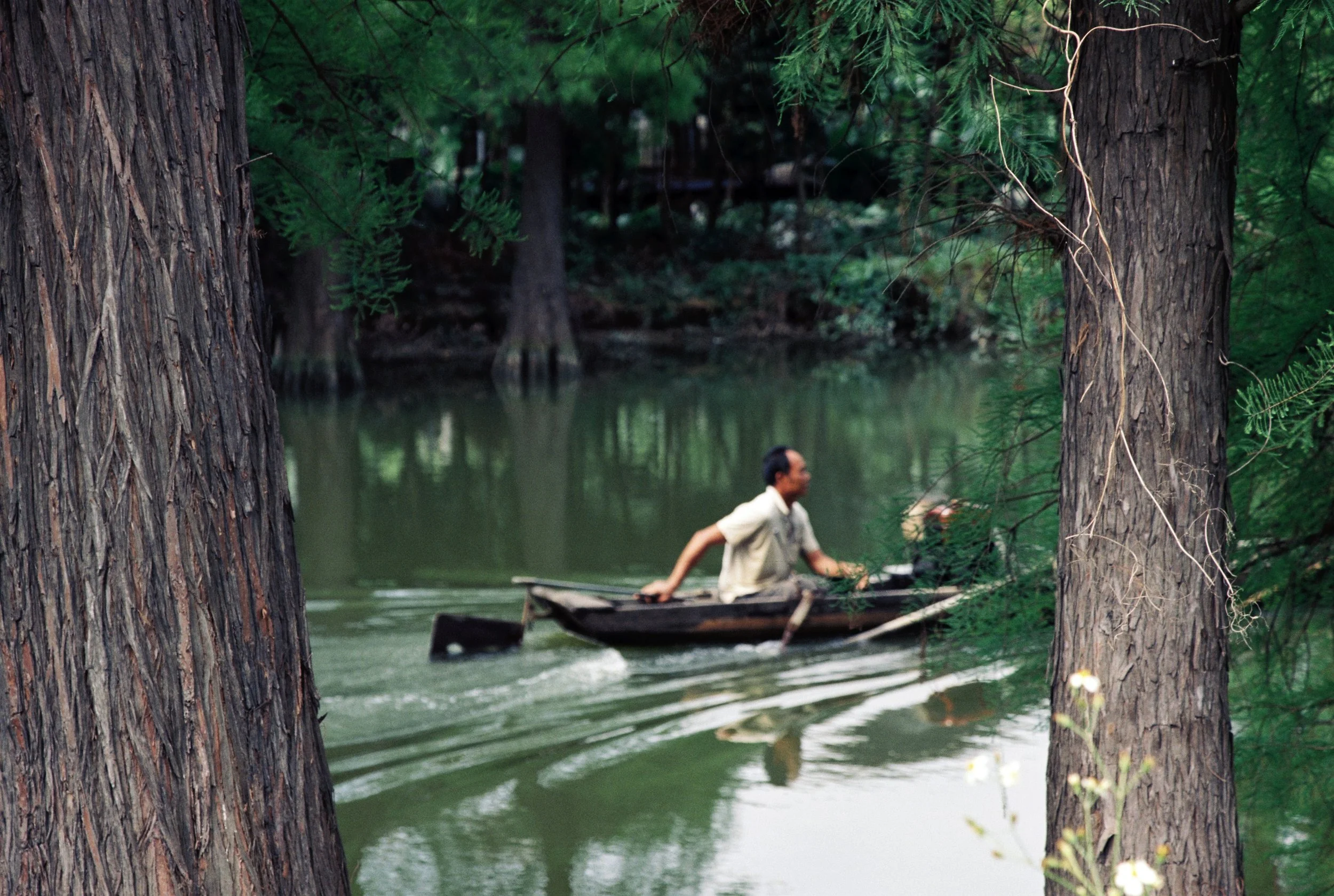
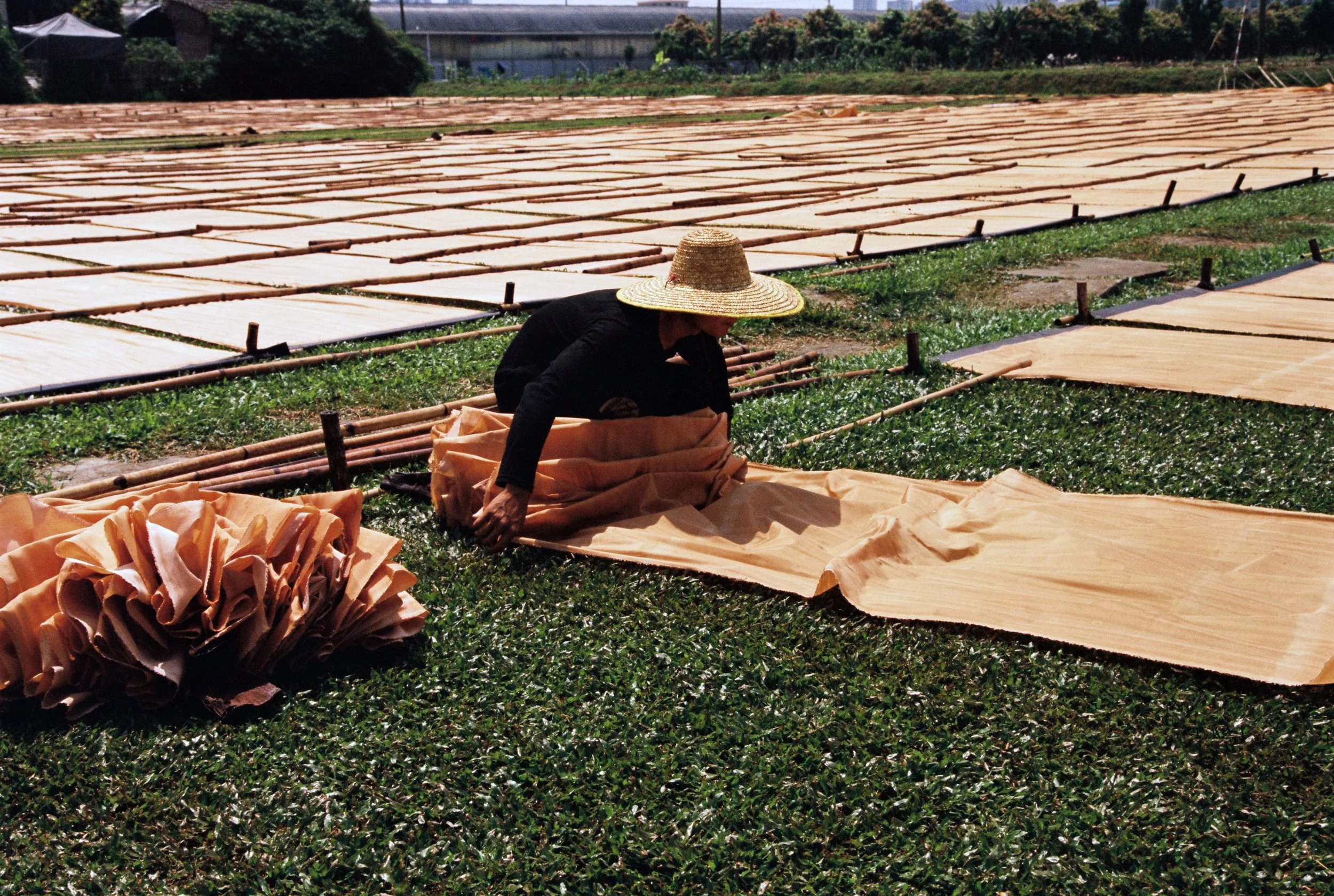
In April, Lingnan basks beneath the warmth of the southern sun. Egrets cut across vast blue skies above gardens nourished by the spirit of heaven and earth. Towering cedar trees rise beside sweeping groves of banana palms; beyond several crystalline rivers stretches a vast field where Xiangyun silk is laid out to dry — an entire landscape scented with gambier plant, filled with undulating lengths of crimson fabric moving like waves.
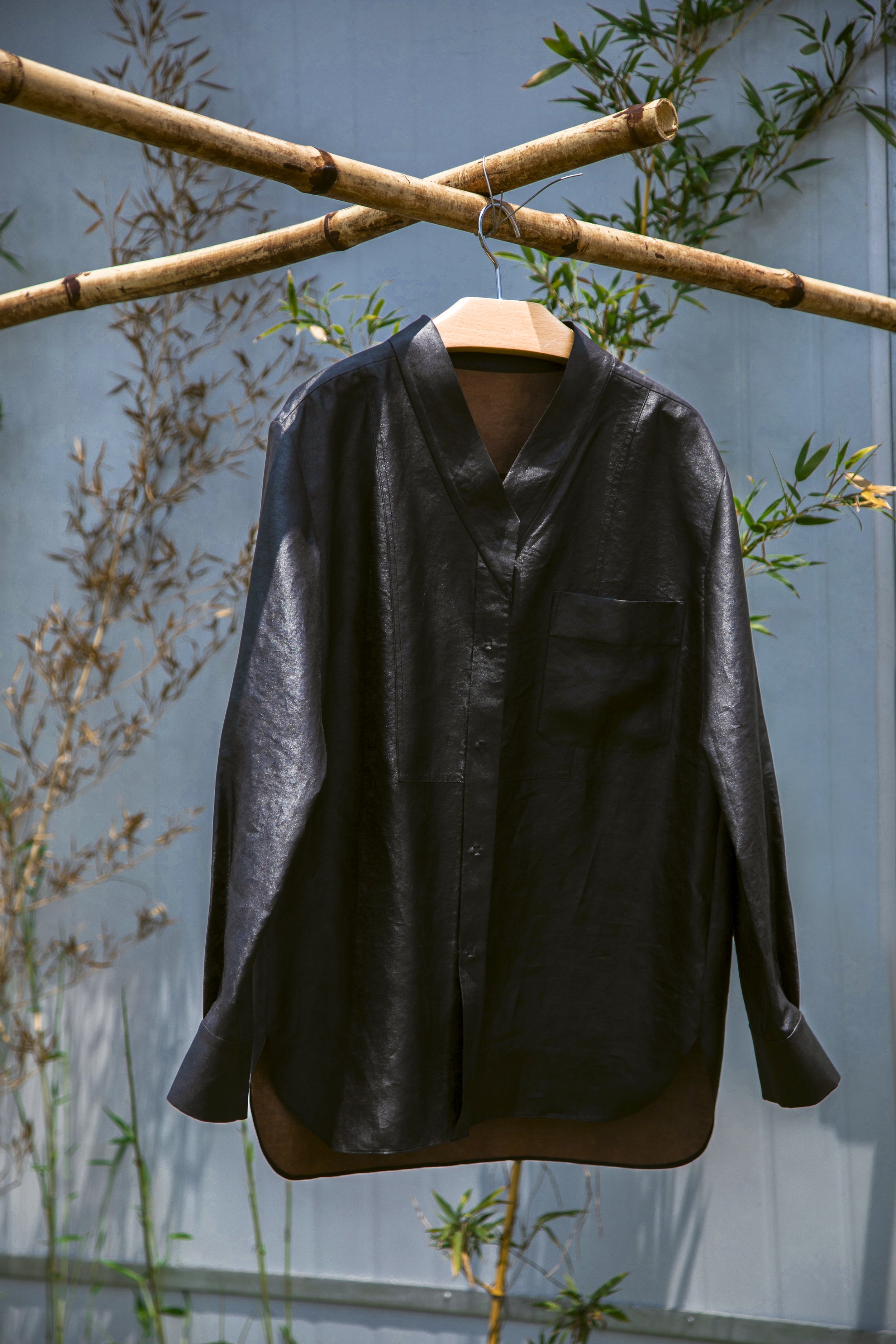
Known as the “soft gold of silk,” Gambiered Canton Silk was recorded as early as the Northern Song Dynasty in Dream Pool Essays by the scientist Shen Kuo:
“In the southern regions there is an abundance of zhekui, dark-skinned and reddish like fo-ti, yielding a crimson juice.”
The term zhekui refers to shulang — a native medicinal plant unique to the region.
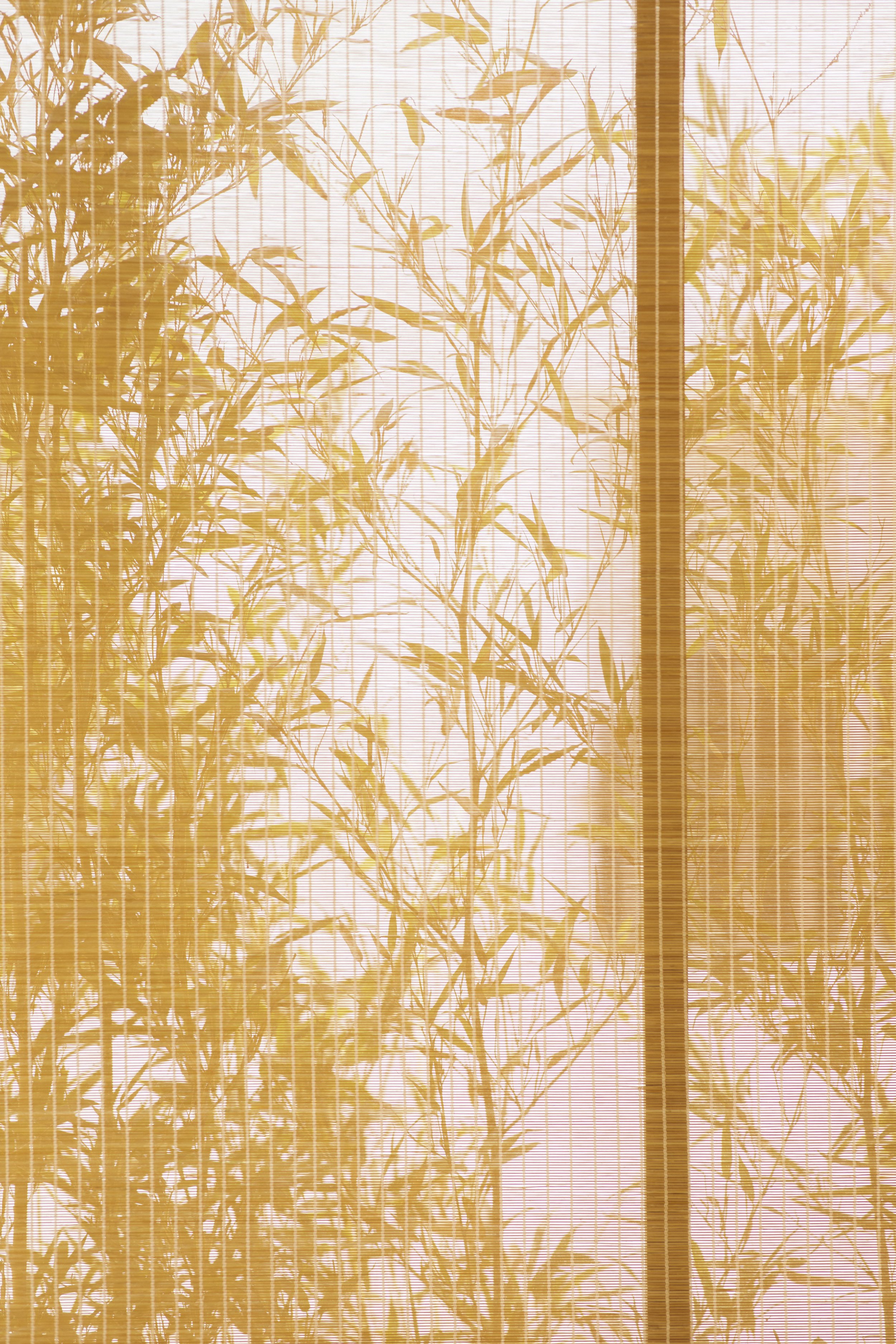
“From July to early August each year, the sunlight becomes too intense and temperatures too high, causing the silk to harden and turn brittle. After November, the dry northern monsoon moves southward, making it unsuitable for sun-drying,” an elderly craftsman explained.
The limitations imposed by season and sunlight make this fabric — one that can only be dried under the brief sun of summer and autumn — exceptionally precious. Yet this traditional textile from southern China nearly vanished during the last century.
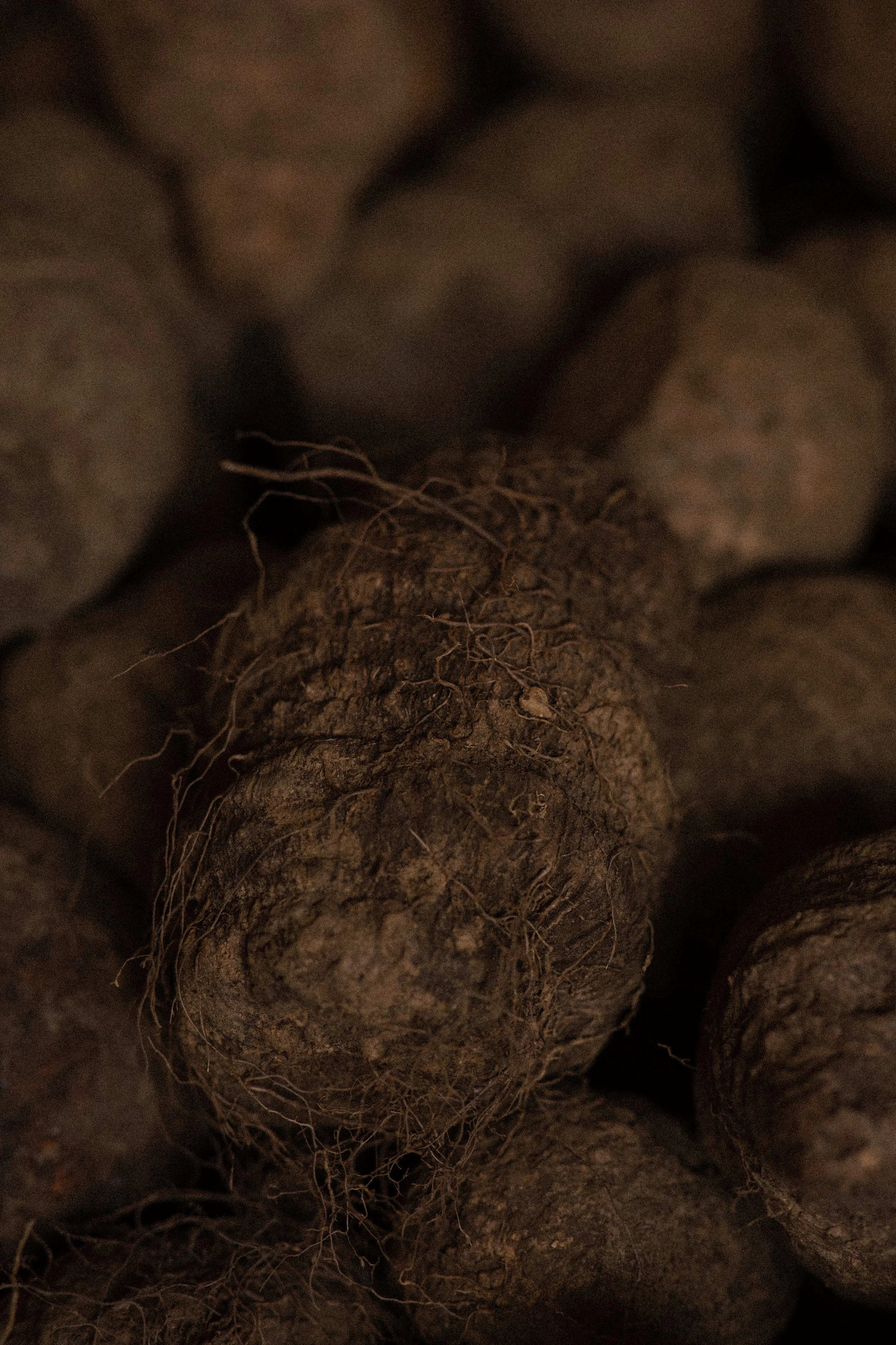
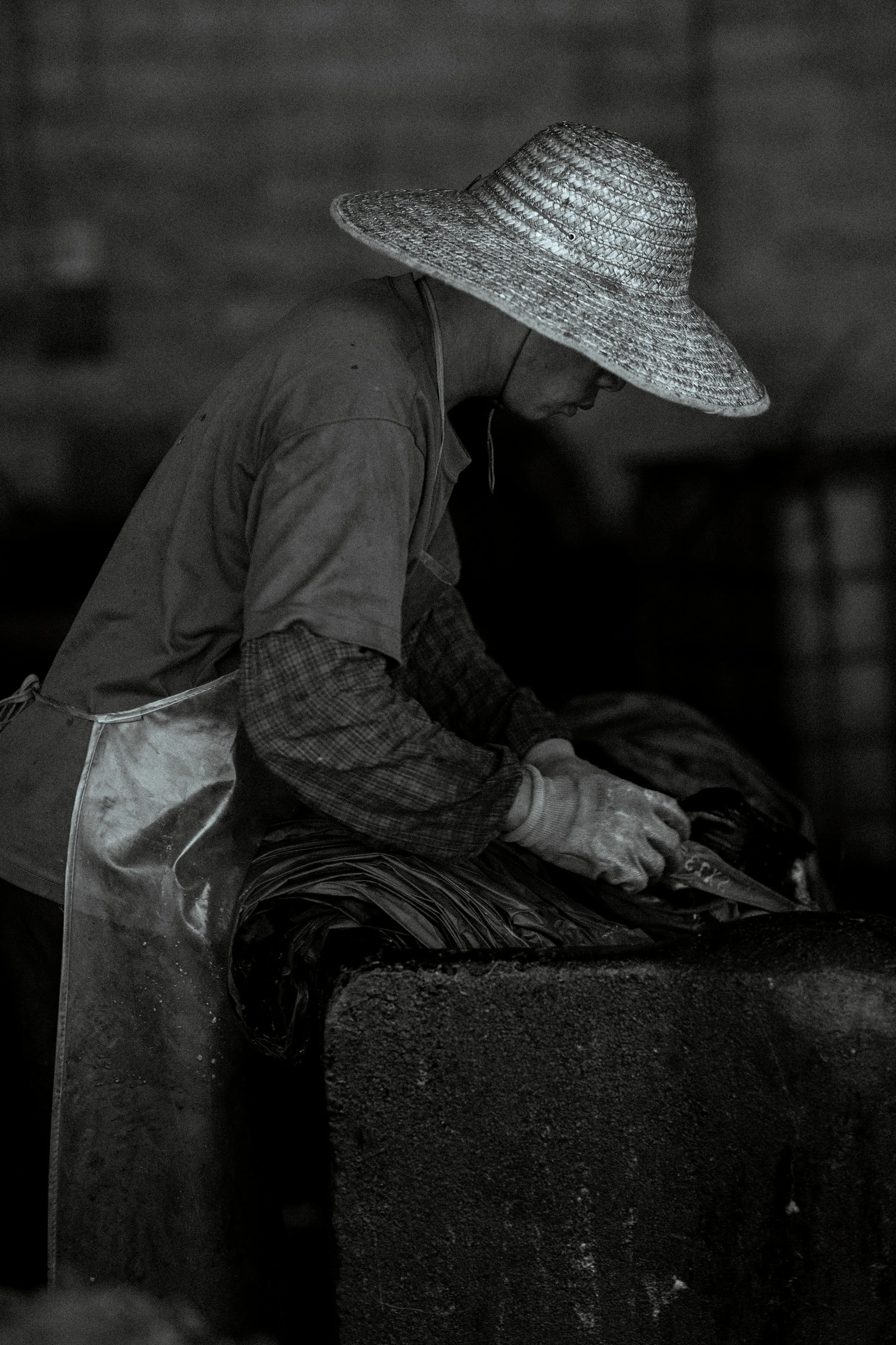
The first step in crafting Gambiered Canton Silk is extracting its essence.
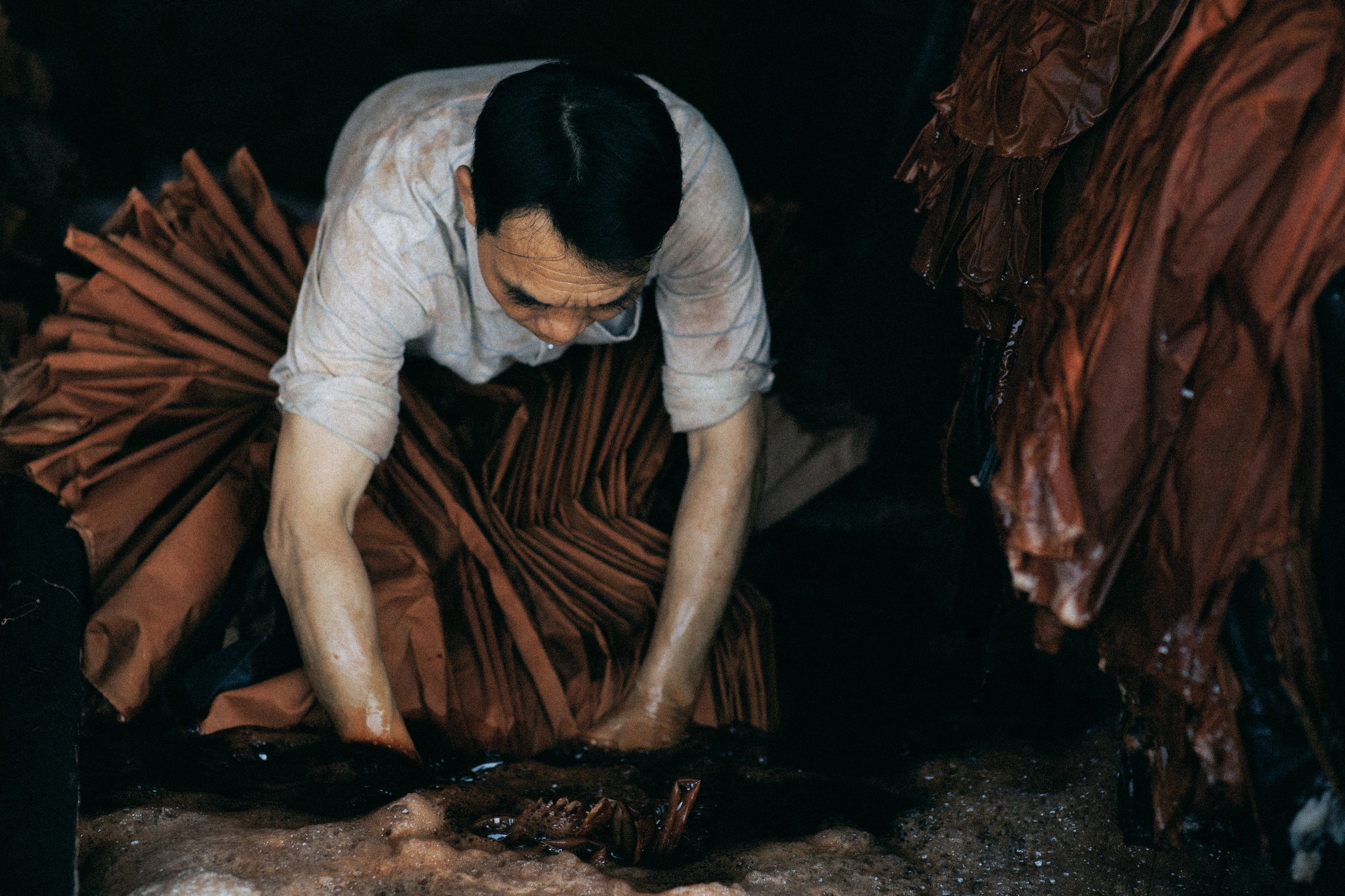
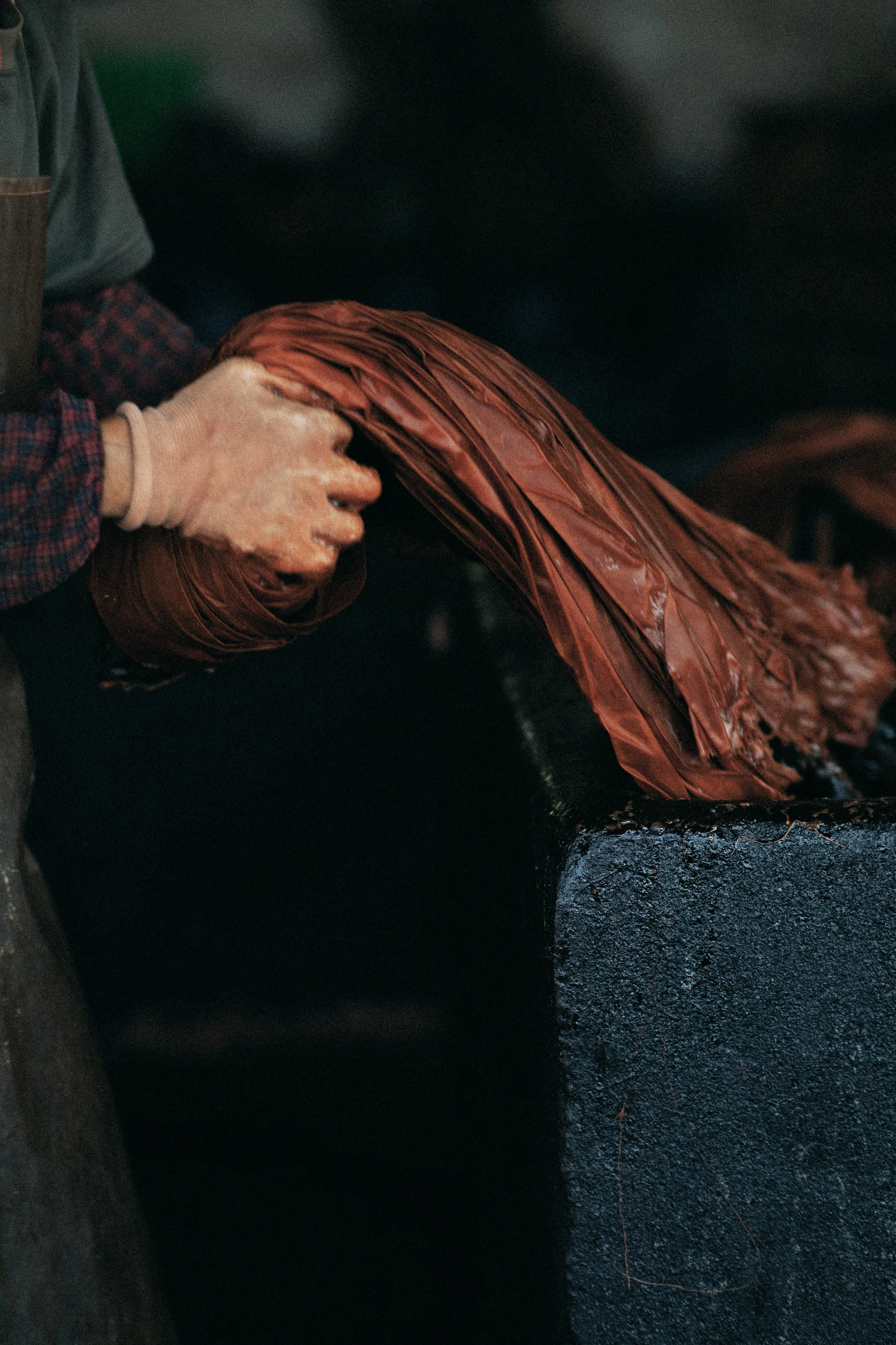
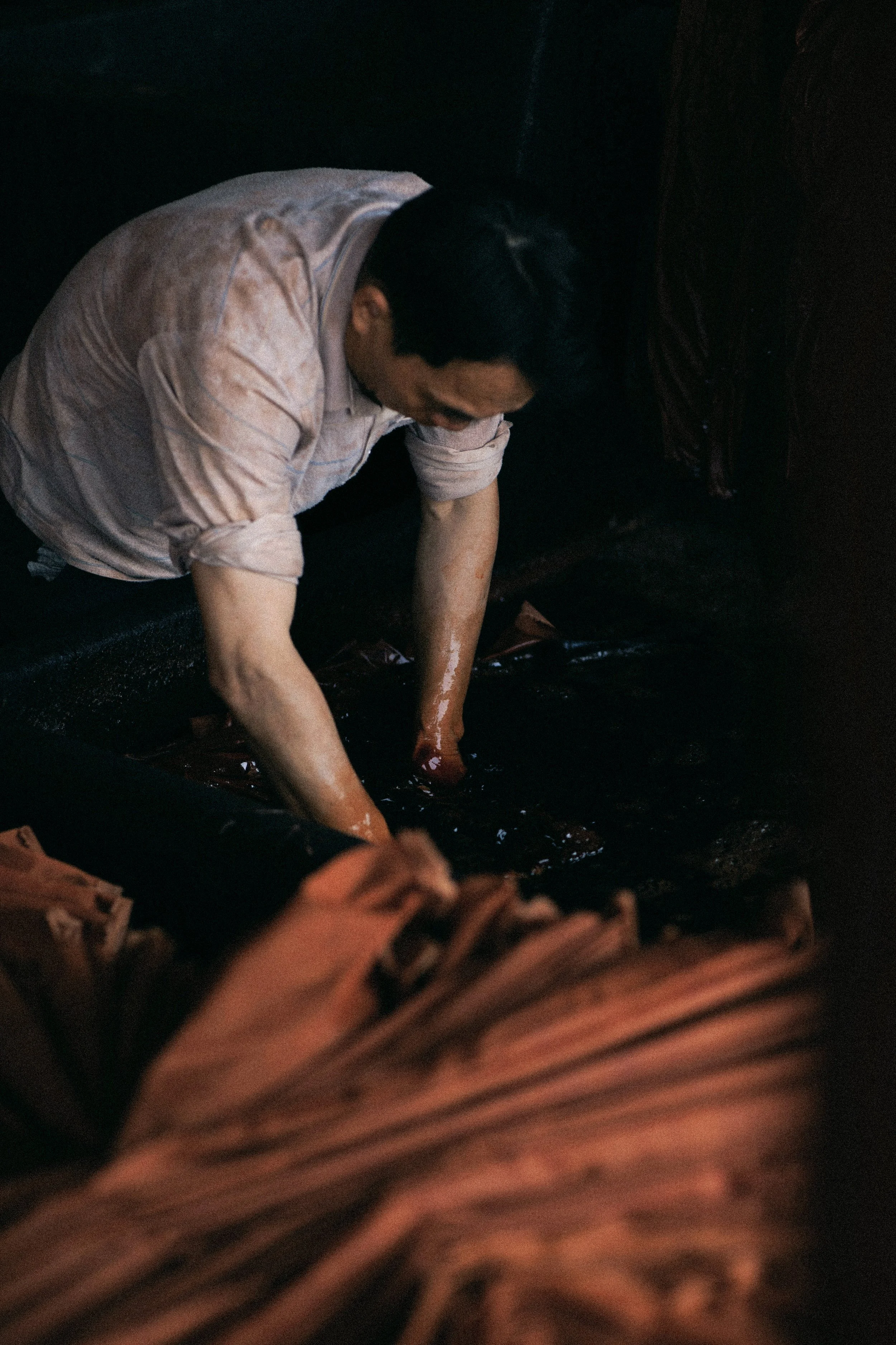
The crushing of the shulang root is also the only stage in the entire process that involves machinery. The ground roots are soaked in pools of water to release their tannin-rich liquid, into which raw silk is immersed and continuously turned by hand. The precise concentration of the dye bath is knowledge mastered by only one or two of the most experienced artisans.
“After repeating the process more than ten times, the fabric is heated and simmered, the excess tannin removed, then boiled and soaked again until the desired tone is achieved,” the craftsman explained. The initial dyeing stage alone requires nearly thirty immersions — a practice he has repeated for over twenty years.
For more than five centuries, Gambiered Canton Silk has endured through its unwavering devotion to traditional craftsmanship and its profound connection to nature, revealing the quiet beauty of the handmade.
Soaking, sun-drying, mud-coating, river-washing…
Its making relies upon sunlight, river mud, plants, water, and time itself. Through repeated washing, boiling, and drying, the fabric gathers the forces of climate, geography, and the balance of the five elements.
Most remarkable is the river mud unique to Lingnan, which holds the secret to its transformation. Rich in uncontaminated iron compounds, the mud is spread over the dyed silk before sunrise. As morning dew begins to evaporate, the tannic acid from the shulang reacts chemically with the iron within the river mud, gradually revealing the fabric’s deep, lustrous sheen.
Using the color of earth itself as pigment, the resulting surface evokes the profound black paintings of Pierre Soulages — transforming fabric into a living symphony of black.
Sun-Drying the Silk
The dyed fabric is stretched flat across open grass fields entirely by hand and secured with bamboo poles beneath the blazing sun. The side facing upward must remain constantly exposed to sunlight. Once dried, the fabric is dipped again into the gambier solution and returned to the sun repeatedly until it develops a deep reddish-ochre tone, after which it proceeds to the next stage known as guo wu.
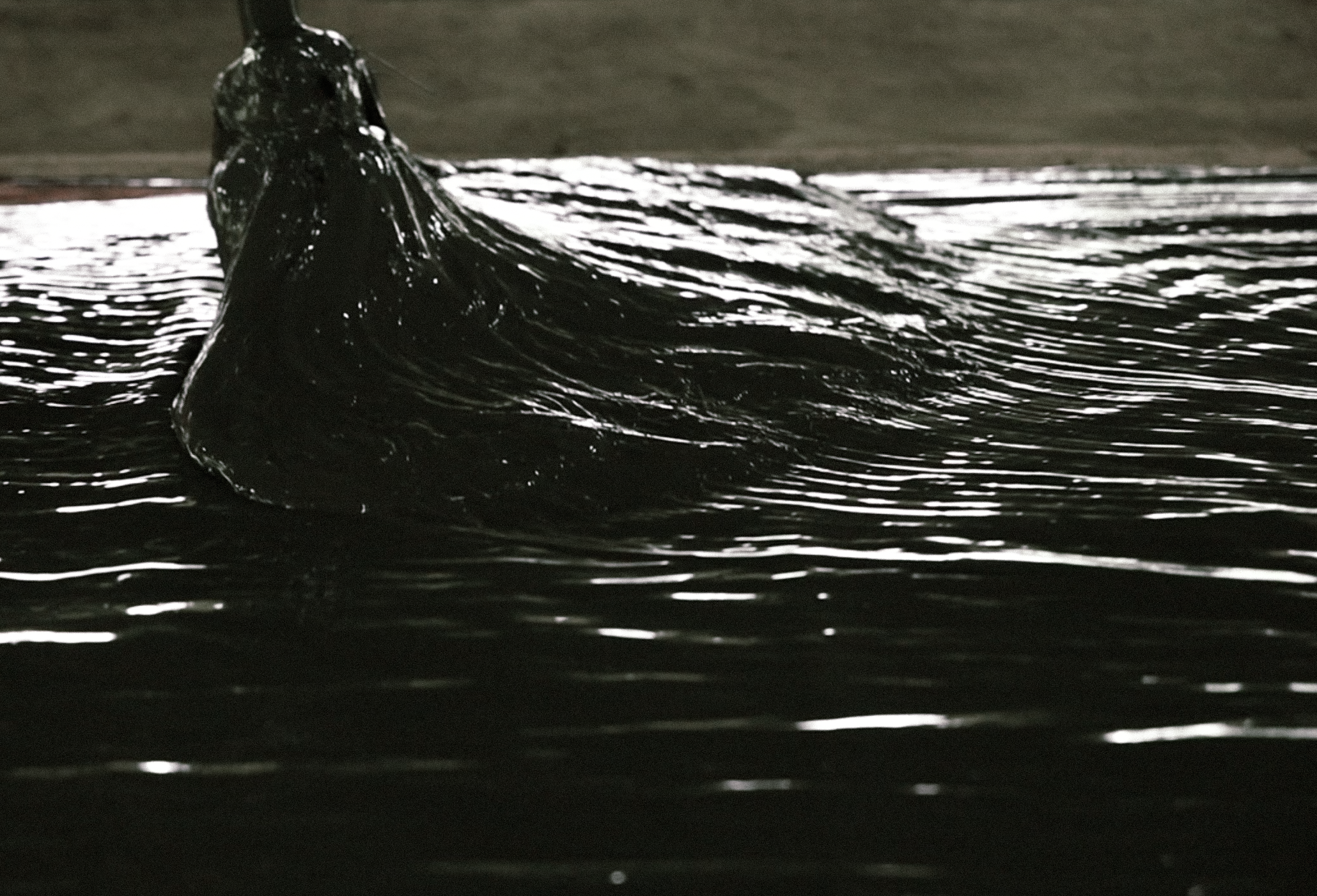
Da Wu — Night Dew Finishing
This is the final stage of the process. After sunset, the silk is spread across the grass overnight. As the roots beneath the earth draw up moisture from the soil, the grass releases its dampness back into the fabric, naturally softening the silk. In the end, the textile reveals its signature dual-toned appearance — one side deep black, the other carrying the muted earthy hues of clay and tile.
Passing Through the Gambier Dye
The raw silk is immersed in the liquid extracted from the shulang plant, then repeatedly pressed, rubbed, and beaten by hand so the fibers can fully absorb the dye. After just several rounds of immersion, the originally white silk gradually turns a rich coffee brown.
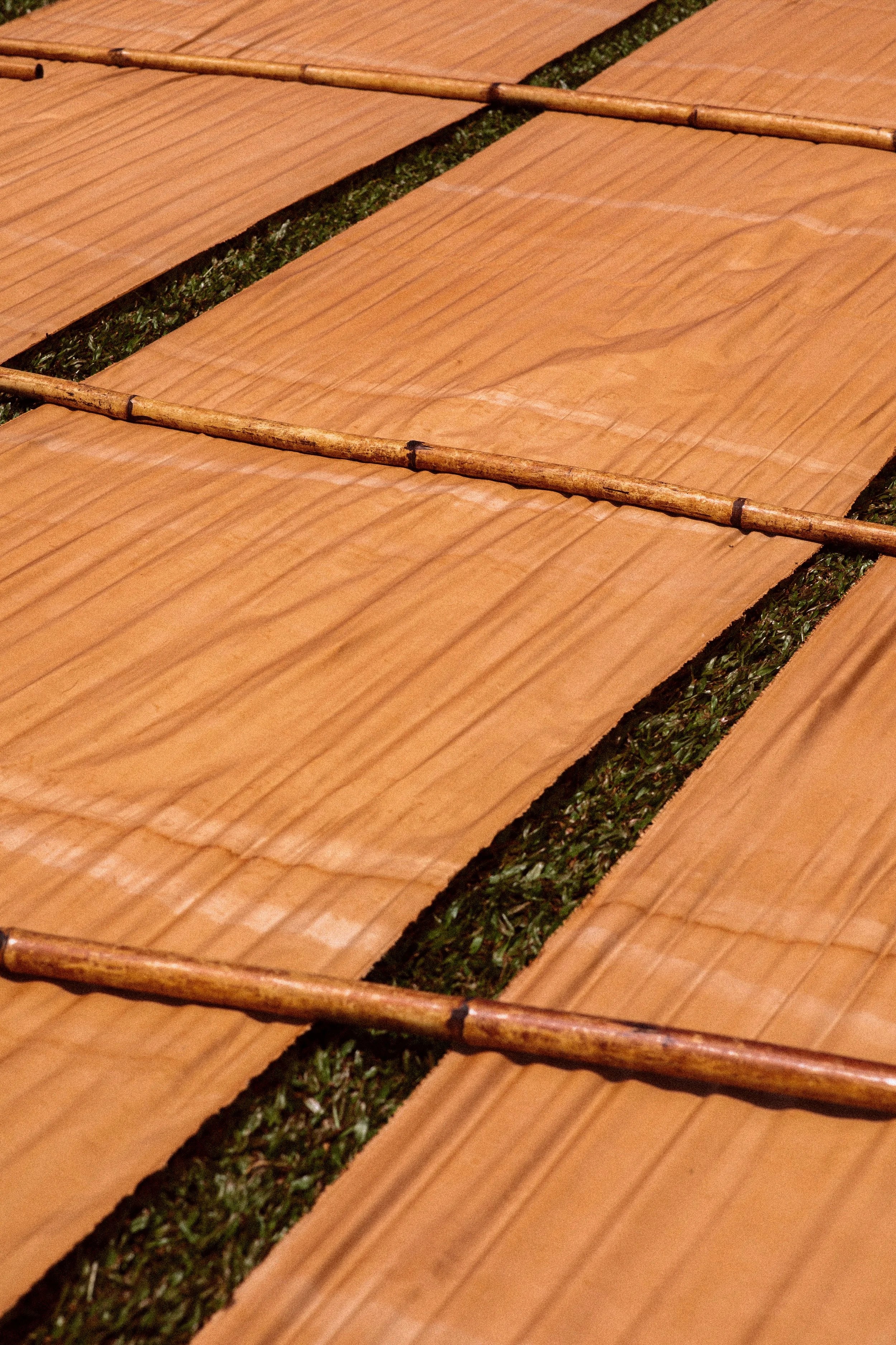
Guo Wu — Mud Coating
Before sunrise, river mud collected from local waterways is carefully mixed into a smooth slurry and evenly spread over the sun-facing side of the silk. After drying throughout the day, the mud is washed away at dusk, and the fabric is laid flat once more in the drying field for the final process known as da wu.
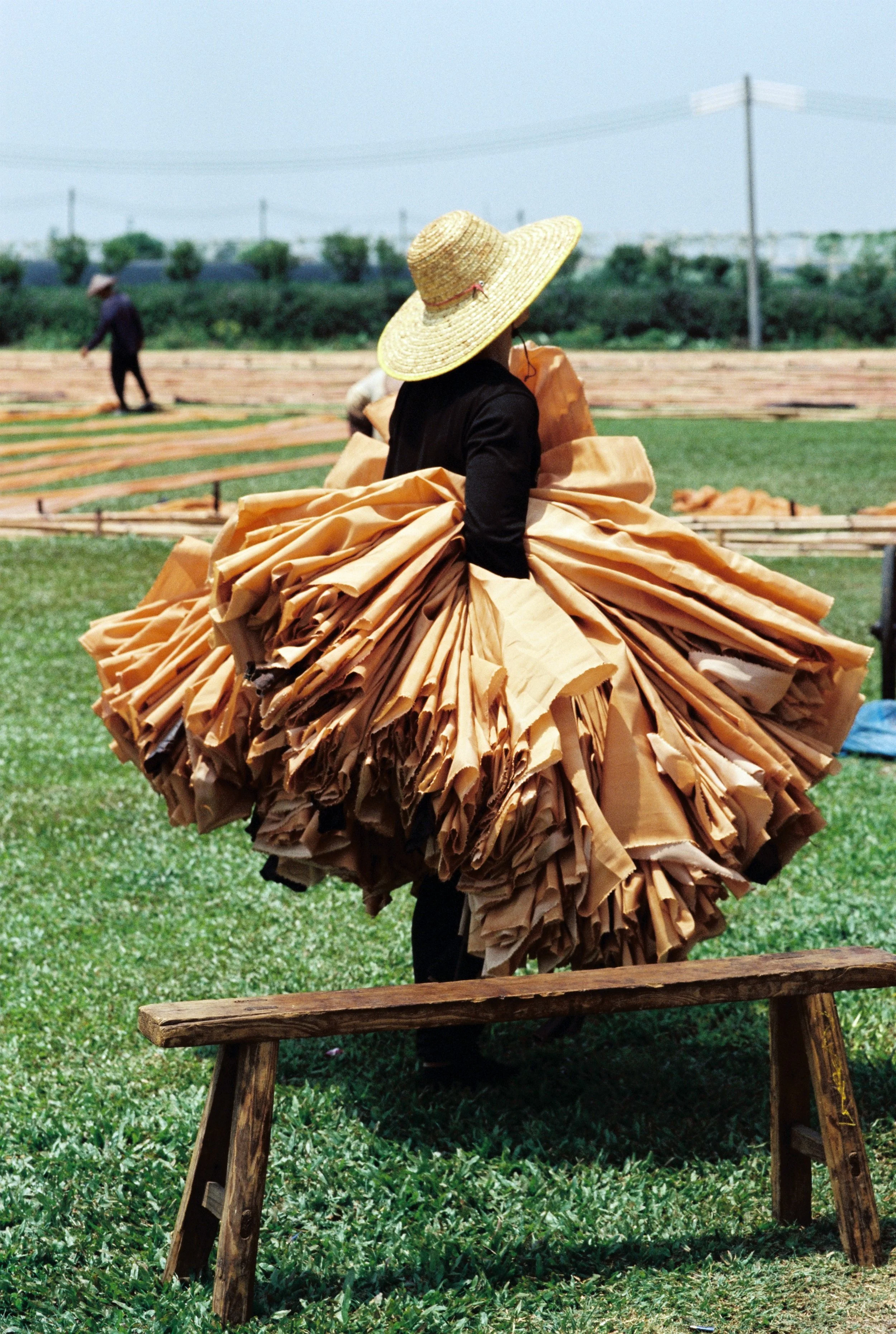
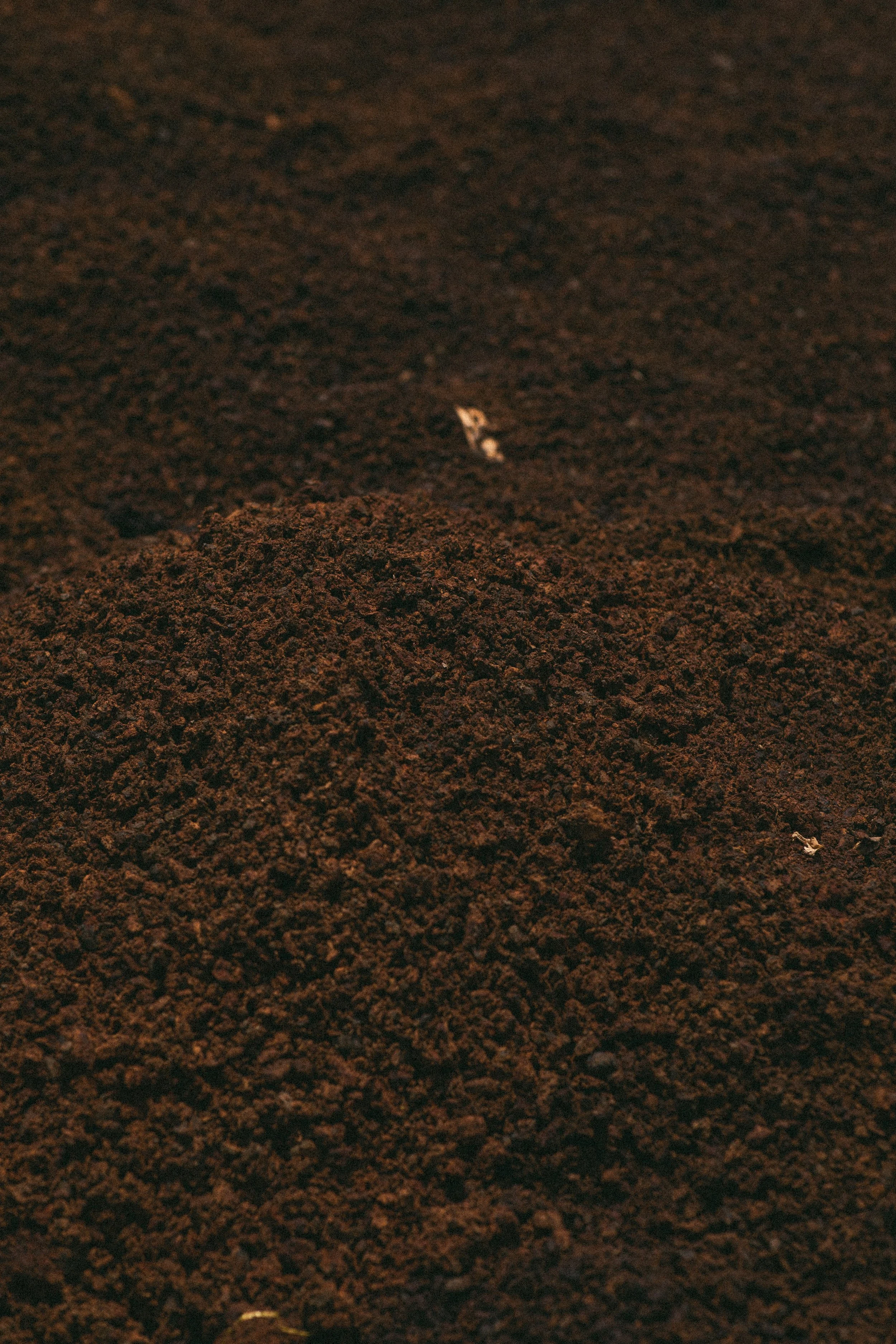
In the end, even the remnants left behind from the dyeing process return to the earth as fertilizer, while the river mud is released back into the waterways from which it came — an interconnected cycle sustained through balance and renewal. As the Daoist saying goes, “When yin and yang interact and harmonize, all things come into being.” The entire process follows the Daoist philosophy of equilibrium between opposing forces: confrontation and fusion, transformation and coexistence, through which all living things emerge. Tempered by nature and shaped by the hands of artisans, the fabric ultimately embodies the primal essence of material and spirit.
After undergoing fourteen intricate stages of craftsmanship, the finished textile must then rest for an additional three to six months before it can finally be cut and tailored into garments. In this way, time itself becomes part of its value. The fabric eventually transforms into something deeply personal to its wearer — carrying within it a fragment of history, memory, and story, quietly preserved close to the body.
After completing the Xiangyun Silk collection, we returned to the workshop carrying the finished garments and met one of the women who had worked there alongside her husband for nearly a decade. It was the first time she had ever worn Xiangyun Silk herself. In some way, it felt like a gesture of gratitude toward the land and the people behind it. Beneath the clear southern sunlight, her unadorned smile became the perfect accompaniment — revealing a beauty that was at once humble, genuine, and profoundly precious.